Chromatography Explained Simply: From Analytical to Preparative Purification
Chromatography is one of the most important separation and purification technologies in chemistry, pharmaceuticals, biotechnology, and the life sciences. It is used to analyze complex mixtures of substances, identify individual compounds, and selectively isolate target substances with a high degree of purity.
Whether analytical chromatography, preparative chromatography, flash chromatography, preparative HPLC (Prep HPLC), or preparative SFC (Prep SFC) —different chromatographic methods are used depending on the sample, the molecule, and the desired result. Terms such as normal-phase, reverse-phase, column chromatography, and SFC purification also play an important role in modern laboratories.
But what exactly is chromatography, how does this separation process work, and how do the various chromatography technologies differ from one another?
In this post, we explain the The Basics of Chromatography: Simple and Easy to Understand and demonstrate which chromatographic techniques are suitable for analysis, method development, screening, and preparative purification.
Many users encounter terms such as analytical chromatography, preparative chromatography, flash chromatography, Prep HPLC, Prep SFC, normal-phase, and reverse-phase on a daily basis. This article explains the most important fundamentals and shows which technology is suitable for which application.
What is chromatography?
Chromatography is a physicochemical separation process used to separate the components of a mixture. The principle is based on the fact that different molecules interact to varying degrees with a stationary phase and a mobile phase.
The sample to be separated is carried by the mobile phase through or over the stationary phase. Because the individual components are retained by the stationary phase to varying degrees, they move at different speeds. This separates the substances from one another.
This fundamental principle is found in numerous chromatographic methods—from classical column chromatography and flash chromatography to HPLC and SFC.
Stationary Phase
The stationary phase remains in place during chromatographic separation. Depending on the method and application, different materials are used, such as:
- Silica or silica gel
- C18 Materials
- Polymer-based materials
- Specific stationary phases for chiral separations
Mobile Phase
The mobile phase moves through the stationary phase and carries the sample. It can be, for example , a solvent mixture, water, or—in the case of SFC—supercritical CO₂.
How does chromatographic separation work?
The sample is first dissolved in the mobile phase and introduced into the chromatography system. It is then transported through the column.
This results in different interactions between the molecules in the sample and the stationary phase. Some compounds are retained more strongly, while others pass through the column more quickly.
To put it simply:
- The mobile phase carries the sample through the system.
- The stationary phase restricts the individual components to varying degrees.
- Different interactions result in different retention times.
- This separates the components of the mixture from one another.
The result is a separation in which the individual compounds elute from the column one after another and can, for example, be detected or collected as individual fractions.
Analytical and Preparative Chromatography
One important difference lies in the objective of chromatographic separation.
Analytical chromatography focuses on the analysis of a sample. It is used, for example, to determine the composition, purity, or identity of a substance.
Preparative chromatography, on the other hand, is used to purify and isolate substances. The target compound is collected after separation and used for further analysis, synthetic steps, or applications.
The most important preparative methods include, among others:
- Flash Chromatography
- Preparative HPLC (Prep HPLC)
- Preparative SFC (Prep SFC)
Which technology is most suitable depends, among other things, on the properties of the molecules, the desired purity, the sample size, and the specific application.
Flash Chromatography
Flash chromatography is a widely used method for rapid preparative purification, particularly in organic synthesis and research. It is suitable, for example, for the purification of synthetic intermediates and is frequently used in method development and routine purification.
Modern automated flash chromatography systems enable reproducible separations and, depending on the system, can support different column sizes, solvents, and detection methods.
Preparative HPLC
Preparative HPLC, or Prep HPLC for short, is used when exceptionally high levels of purity and complex separations are required. It plays an important role in areas such as pharmaceutical research, drug discovery, peptide purification, and the purification of complex molecules.
Reverse-phase HPLC is used particularly frequently. In this method, C18 stationary phases, for example, are used to efficiently separate polar and moderately polar compounds.
Preparative SFC
Supercritical Fluid Chromatography (SFC) uses a supercritical fluid, typically CO₂, as a key component of the mobile phase. Preparative SFC is suitable for both chiral and achiral separations and is increasingly being used for rapid and efficient purifications.
One advantage of SFC is its comparatively low consumption of organic solvents. This makes the technology particularly attractive for high-throughput sample processing and demanding preparative applications.
Which type of chromatography is the right one?
The optimal chromatography method depends on several factors: molecular structure, polarity, sample volume, desired purity, separation goal, and throughput.
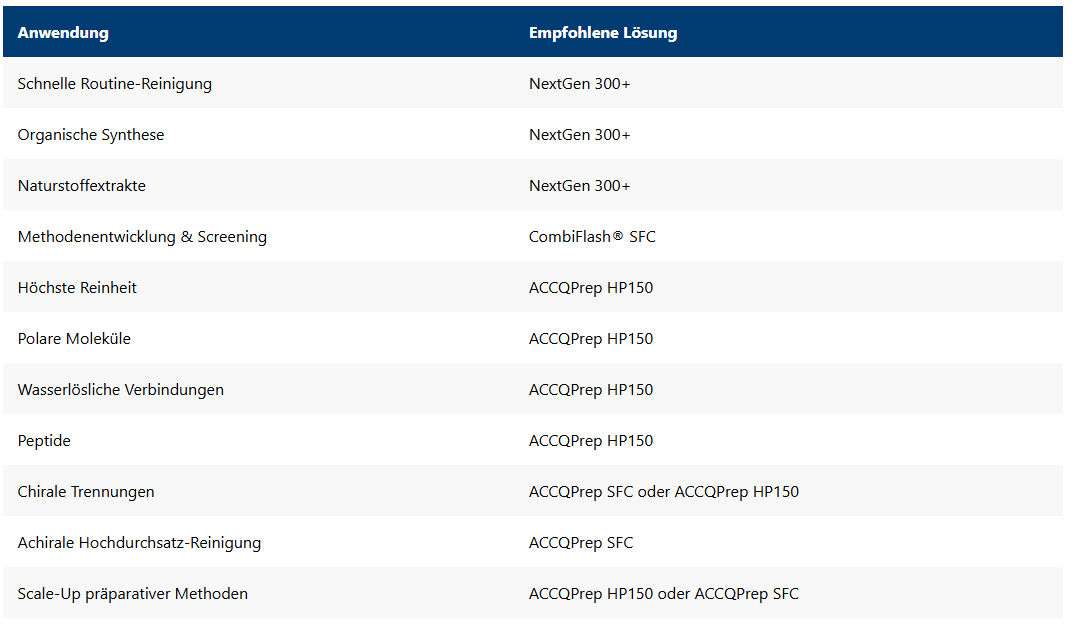
While flash chromatography is frequently used for rapid routine purifications and organic synthesis, Prep HPLC is particularly well-suited for applications requiring high purity. Prep SFC, in turn, offers interesting possibilities for rapid chiral and achiral separations as well as efficient solvent consumption.
For the Method Development and Screening Flexible chromatography platforms can be used to quickly evaluate different separation methods and conditions.
Normal Phase and Reverse Phase
Normal-Phase Chromatography
The normal phase is frequently used in flash chromatography.
Stationary phase: Silica (polar)
Mobile phase: heptane, cyclohexane, hexane, ethyl acetate
Polar compounds interact more strongly with the silica surface and are retained for a longer period of time.
Reverse-Phase Chromatography
Reverse-phase chromatography is now the standard in analytical and preparative HPLC.
Stationary phase: C18, C8, phenyl
Mobile phase: water / acetonitrile or water / methanol
Nonpolar molecules are retained more strongly and elute later.
Where does the SFC stand?
SFC is often regarded as a distinct technology. From the perspective of the separation mechanism, however, it is often based on principles that are very similar to those of the normal phase.
Instead of heptane or ethyl acetate, supercritical CO₂ is primarily used in combination with alcohols such as methanol or ethanol.
The high pressure is primarily used to keep the CO₂ in a supercritical state.
Simply put: Anyone who understands the principle of the normal phase already understands a large part of SFC separations.
Our Solutions for Preparative Chromatography
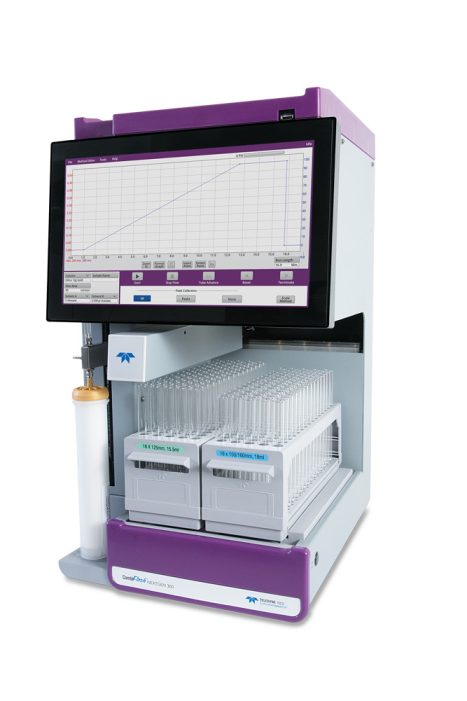
NextGen 300+
The Teledyne LABS NextGen 300+ is a state-of-the-art flash chromatography system designed for fast, reliable, and cost-effective purifications in the laboratory. This high-performance system is ideal for organic synthesis, natural product research, method development, and routine purifications.
With a flexible flow rate of up to 300 ml/min, the NextGen 300+ from Teledyne LABS enables efficient separation and purification of a wide variety of compounds. Its intuitive operation and automated functions support reproducible chromatography processes and simplify daily laboratory operations.
Thanks to its versatility, the Teledyne LABS NextGen 300+ Flash Chromatography System is a reliable solution for research, development, and routine laboratories that prioritize efficient and reproducible purifications.
Your advantages at a glance:
- Modern Flash Chromatography System from Teledyne LABS
- Fast and Cost-Effective Purification
- Ideal for organic synthesis and natural products
- Suitable for method development and routine purification
- Intuitive operation and automated functions
- For reproducible chromatographic separations
ACCQPrep HP150
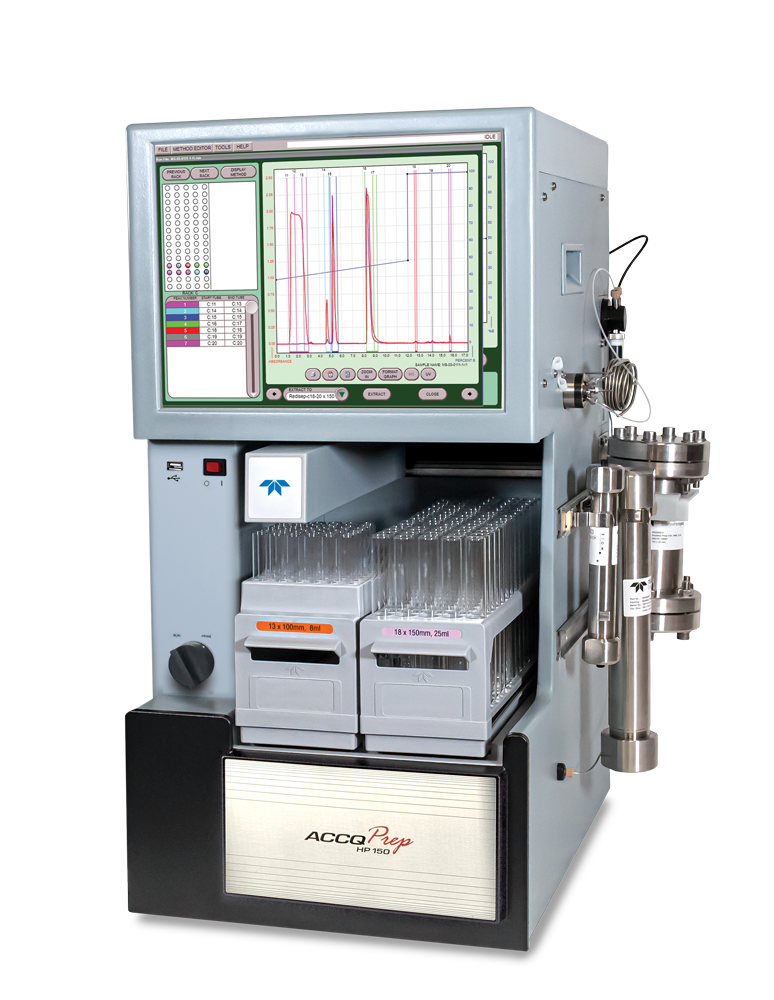
The preparative HPLC platform from Teledyne LABS was developed to meet the highest purity requirements and for demanding reverse-phase HPLC applications. This high-performance system enables the reliable and efficient purification of a wide variety of substances and is particularly well-suited for demanding preparative chromatography in the laboratory.
The platform is ideally suited for the purification of polar molecules, water-soluble compounds, and peptides, offering a wide range of applications in pharmaceutical research and development. Precise separations and high purities make Teledyne LABS’ preparative HPLC a high-performance solution for modern laboratory applications.
Whether for pharmaceutical applications, peptide purification, or the preparative purification of complex compounds —the HPLC platform from Teledyne LABS supports reproducible processes and meets high-quality standards.
Your advantages at a glance:
- Preparative HPLC Platform from Teledyne LABS
- For the highest purity requirements
- Optimized for reverse-phase applications
- Ideal for polar and water-soluble compounds
- Suitable for peptide purification
- High-Performance Solution for Pharmaceutical Applications
ACCQPrep SFC
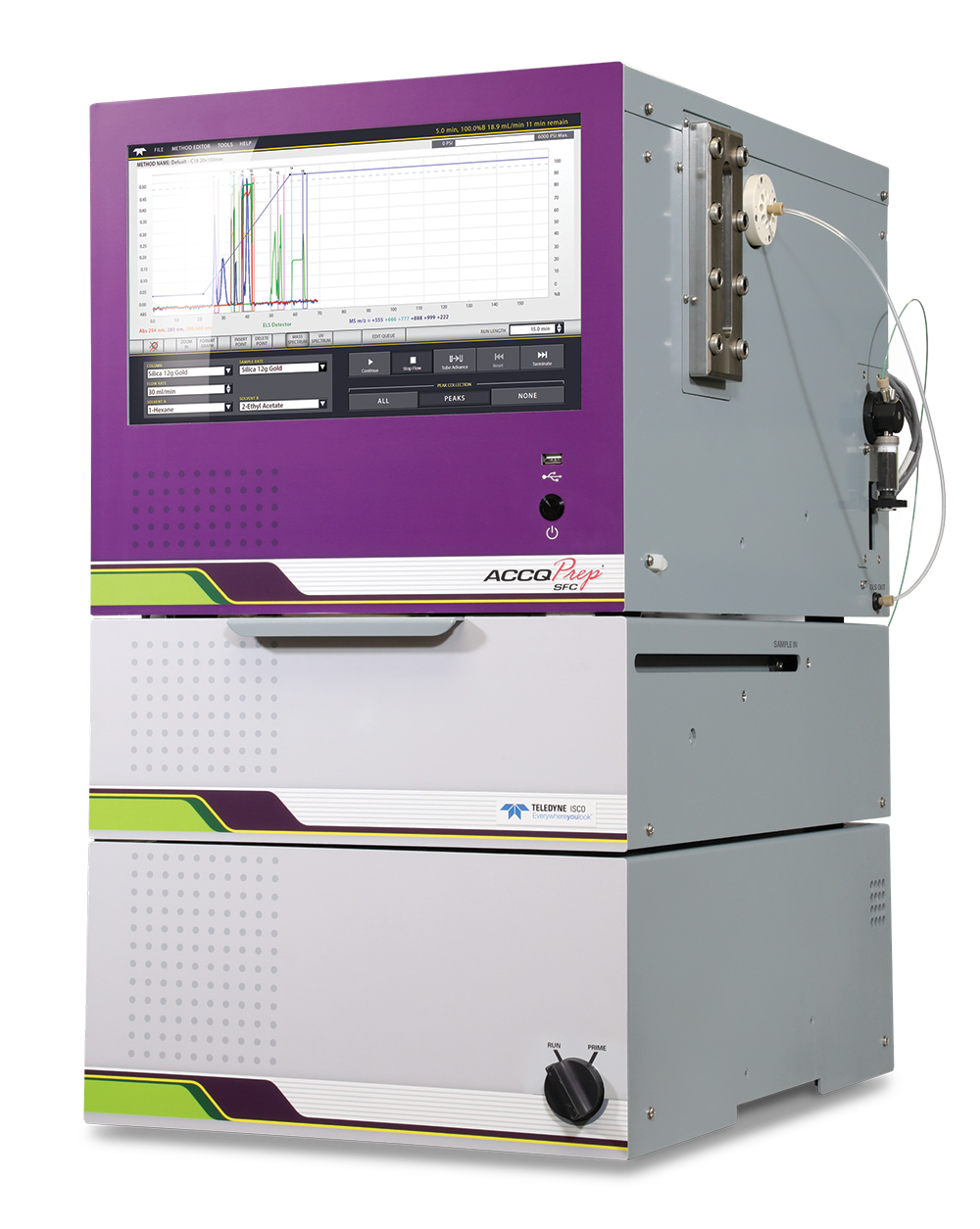
The ACCQPrep SFC from Teledyne LABS is a high-performance platform for fast and efficient preparative SFC separations. The system was developed for demanding chromatographic purifications and enables reliable separation of a wide variety of compounds while ensuring efficient use of solvents.
The preparative SFC platform from Teledyne LABS is suitable for both chiral and achiral separations, offering versatile applications in research, development, and pharmaceutical applications. Its high sample throughput allows purification processes to be designed efficiently and larger sample volumes to be processed reliably.
Another advantage of the ACCQPrep SFC is its reduced solvent consumption compared to many traditional chromatographic methods. As a result, the system combines high separation performance with efficient and cost-effective laboratory operations.
Your advantages at a glance:
- Preparative SFC Platform from Teledyne LABS
- Fast and Efficient SFC Separations
- For chiral and achiral separations
- High sample throughput
- Reduced Solvent Consumption
- Ideal for demanding preparative purifications
- Suitable for research, development, and pharmaceutical applications
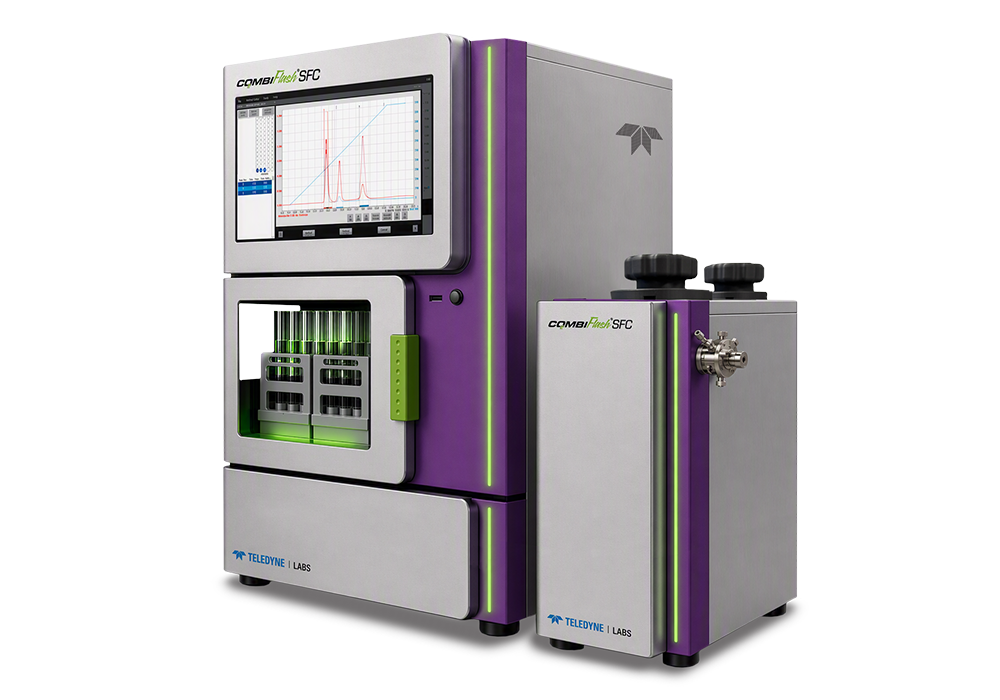
CombiFlash® SFC
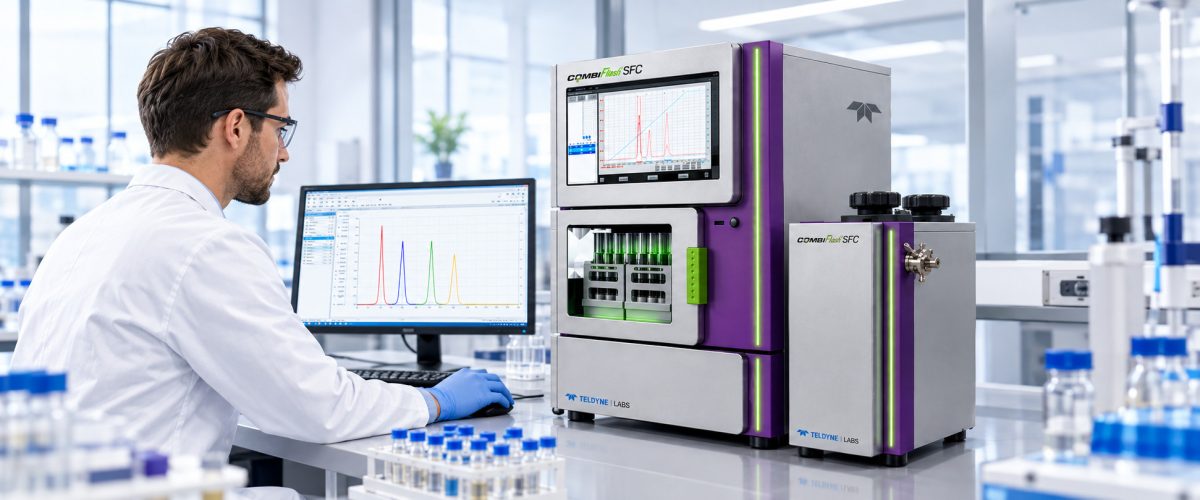
The Teledyne LABS CombiFlash® SFC combines the advantages of flash chromatography and supercritical fluid chromatography (SFC) on a compact platform. The system was developed to enable fast and efficient preparative SFC separations using a familiar and easy-to-use flash workflow.
The CombiFlash® SFC is particularly well-suited for method development, screening, and research and development. With flow rates ranging from 40 to 200 mL/min, four selectable co-solvents, and gradients from 0 to 70%, the system allows for flexible adjustment of separation conditions. This makes it possible to analyze and purify even more polar compounds using SFC.
Using supercritical CO₂ as the mobile phase can significantly reduce the consumption of organic solvents. Teledyne LABS states that the use of CO₂ can reduce the need for strong organic solvents by up to 95%. This makes the CombiFlash® SFC an attractive option for laboratories seeking to combine efficient separations with a more resource-efficient chromatography workflow.
Your advantages at a glance:
- Flash Chromatography and SFC on a Single Platform
- By Teledyne LABS
- Flexible method development and rapid screening
- Flow rates of 40–200 ml/min
- Four co-solvents with gradients of up to 70%
- For preparative SFC separations
- Reduced Use of Organic Solvents
- Ideal for research and development
- Suitable for pharmaceutical intermediates, natural substances, and synthetic reaction mixtures
Which technology is the right one?
The choice of the appropriate technology depends on several factors:
- Desired Purity
- Molecular Structure
- Solubility
- Throughput
- Budget
- Development Effort
Method Development and Scale-Up
Successful preparative purification usually begins with the development of a suitable method.
All of our platforms support the development and optimization of chromatographic methods. Based on initial separations, retention times, peak shapes, and purities can be analyzed, and the optimal purification strategy can be determined.
Preparative methods can be developed and scaled up directly from analytical HPLC or SFC methods.
- Develop an Analytical Method
- Identify the target connection
- Optimize Separation Conditions
- Calibrate the preparative method
- Perform a scale-up
- Perform a purity check
This makes it possible to carry out the transition from analytical to preparative purification efficiently and reproducibly.
Chromatography encompasses much more than just a single technique. Depending on the sample, purity requirements, and project objectives, different separation modes and systems are used.
Flash chromatography offers fast and cost-effective purification. Preparative HPLC delivers the highest levels of purity. Preparative SFC stands out for its high productivity and reduced solvent consumption.
With the NextGen 300+, ACCQPrep HP150, ACCQPrep SFC, and CombiFlash® SFC, there is a suitable solution available for virtually every preparative separation task.
Whether it’s flash chromatography, preparative HPLC, or SFC: The choice of the right technology depends on the application, the desired purity, the sample volume, and the properties of the molecule.
With the NextGen 300+, ACCQPrep HP150, ACCQPrep SFC, and CombiFlash® SFC, there is a suitable solution available for virtually every preparative separation task.
We would be happy to advise you on a solution tailored to your needs.